How to Choose a Lawn Care Company in Northern Virginia
Short answer
Start with licensing: in Virginia, a company applying pesticides for hire must hold a pesticide business license, and applications must be made by or under the supervision of a certified applicator registered with VDACS. Then verify insurance, ask what the program actually contains visit by visit, and confirm somebody measured or walked your property. Everything else — reviews, contracts, specialization — refines the decision after those three.
What should you verify before hiring?
Licensing and insurance, before you discuss price. In Virginia, the Department of Agriculture and Consumer Services (VDACS) licenses businesses that apply pesticides commercially and separately certifies individual applicators, and you can ask for both numbers.
Work down this list on the phone. It takes four minutes and eliminates most of the companies you would have regretted hiring.
| What to check | How to check it | A good answer |
|---|---|---|
| Pesticide business license | Ask for the VDACS business license number | A number read back without hesitation |
| Certified applicator | Ask who is certified and for their certification number | Every application made by or under a certified applicator |
| Liability insurance | Ask for a current certificate of insurance | Sent over without a fuss |
| Who does the work | Ask if technicians are employees or subcontractors | Trained employees, familiar faces each visit |
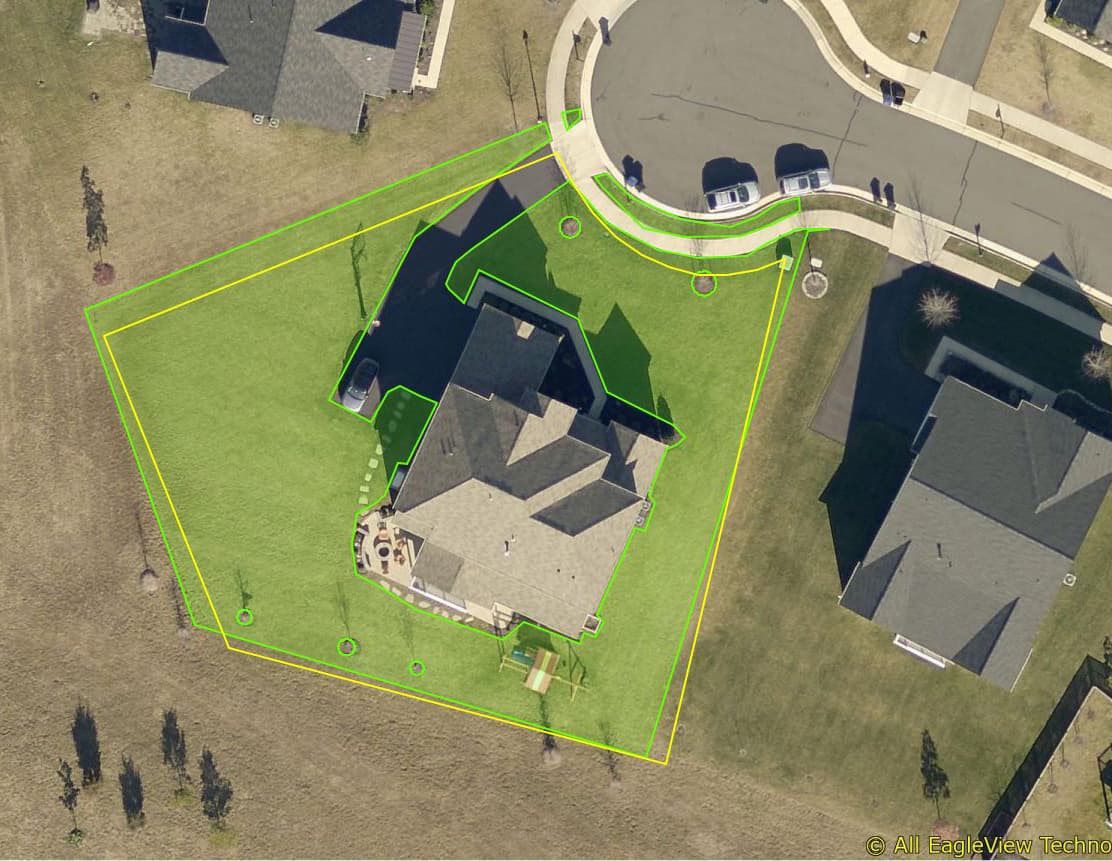
| Measurement | Ask what your turf square footage is | A real number from imagery or a walk-through |
| Contract | Ask what cancelling costs | Pay as you go, cancel any time, no penalty |
The questions a mow-and-go cannot answer
Ask about soil, timing, and fall — that is where a real turf program and a mowing crew with a spreader stop resembling each other. None of these are trick questions; anyone who does this work has an answer ready.
- How do you handle soil pH — is lime built into the program, or sold as an add-on?
- What is your plan for fall aeration and overseeding, and what seed rate do you use?
- When do you put down crabgrass pre-emergent, and how do you decide the date?
- Do you treat by soil temperature or by a calendar route?
- What do you do about Japanese stiltgrass?
Why does soil temperature matter in the answer?
Because timing is most of the result, and a calendar route gets it wrong. Crabgrass germinates when soil at two inches holds around 55°F — typically mid-March to early April here — and a warm February pulls that window forward.
Stiltgrass is the local tell. It is a serious invasive along the rural edges around Haymarket and Warrenton, and anyone who works these lawns recognizes the name instantly. A blank look means you are talking to someone whose route happens to include Virginia. Our Northern Virginia lawn care calendar is a fair yardstick for whatever schedule you are shown.
How to read reviews without being fooled
Read the recent ones and the replies to the bad ones — the star average is the least useful number on the page. A 4.9 built four years ago describes a company that no longer exists in the same form.
Sort by newest and read the last six months. Then find the one- and two-star reviews and read the replies: a specific, non-defensive response that names what went wrong beats a wall of five-star ratings. Volume matters only as a sanity check that the reviews are real.
Contracts, quotes, and who actually looked at your lawn
Contracts are common in this industry but not necessary, and a company confident in the work does not need to lock you in. Ask the term, the cancellation penalty, and whether the price renews automatically at a higher rate.
Then ask who produced the quote. Someone should have measured the turf and ideally walked the property — slope, shade, the wet corner, whether a spreader fits through the gate. A quote issued without either is a placeholder. Our guide to what lawn care costs here covers how to compare two of them line by line.
Specialists, generalists, and what to look for
A turf specialist and a full-service landscaper solve different problems, and a struggling lawn is a turf problem. Mowing, mulch, and pruning are scheduling businesses; fertility, weed control, and seeding are agronomy, and clay soil in a transition-zone climate punishes guesswork.
As one example of what credentials look like when they are real: Simply Turf is owned by Patrick Klippen, who holds a B.S. in Landscape Horticulture from Colorado State University (2008), VDACS certified applicator #141054, and Virginia pesticide business license #14809. Founded in 2019 and based in Gainesville, locally owned rather than a franchise, no contracts, 4.8 stars from 126+ reviews.
You should be able to write that same paragraph about whoever you hire. If you cannot — vague license, stale reviews, nobody has seen your lawn — keep calling.
Red flags
Four things should end the conversation. Together they explain most bad lawn care experiences here.
- Door-to-door pressure and a discount that expires today
- A price quoted with no measurement of your turf
- A bid far below everyone else — something is missing from it
- Vague answers about what products get applied, or refusal to leave a record of the application
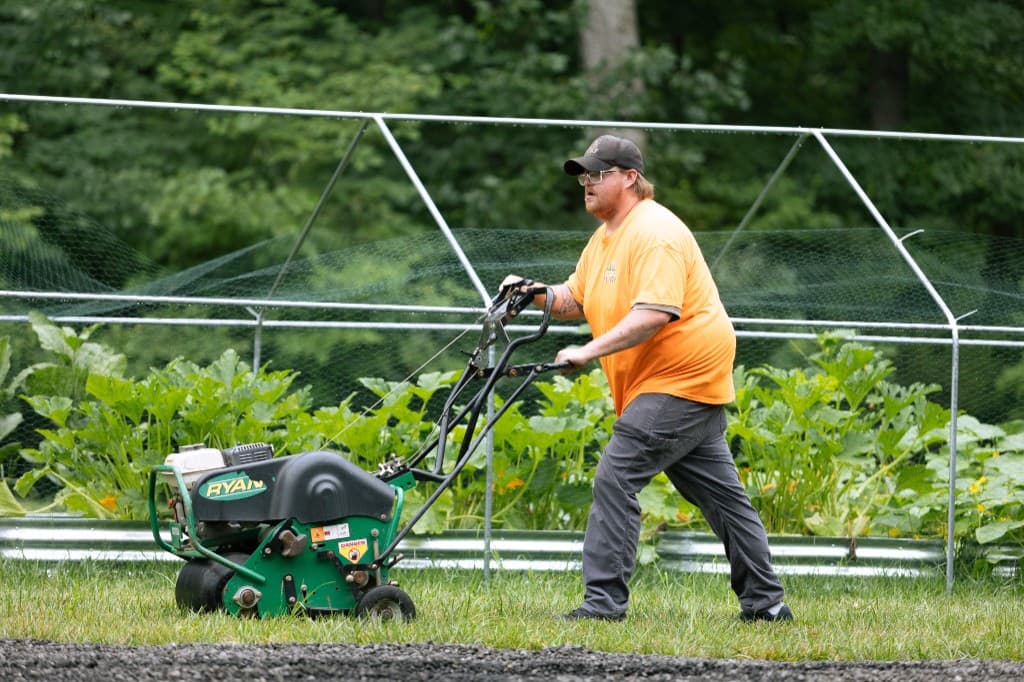
- Marketing double core aeration as a premium — it usually means walk-behind equipment that cannot pull cores in clay
Want this handled for you?
Simply Turf is a licensed, locally owned turf-health company in Gainesville, VA. Free quote, no contracts, and honest advice about what your lawn actually needs.
Common questions
Ask for the pesticide business license number and the name and certification number of the certified applicator, both issued by VDACS. A licensed company gives you these without hesitation and can produce documentation on request. If a company deflects, treat that as the answer.
It matters mainly for who is accountable and who is standing on your lawn. A local owner-operated company usually sends the same technicians and can adjust timing to your property; a franchise brings standardized programs and a call center. Both can be licensed and competent, so judge the program and the licensing, not the logo.
No. Annual agreements are common but not required, and plenty of companies here bill per application with no commitment. If you are asked to sign, read the cancellation terms and the automatic-renewal clause before anything else.
Someone should assess before applying anything: identify the grass type, note the weeds actually present, check for compaction and shade problems, and confirm the measured turf area. You should get a record of what was applied and what to do next, usually watering and mowing instructions.