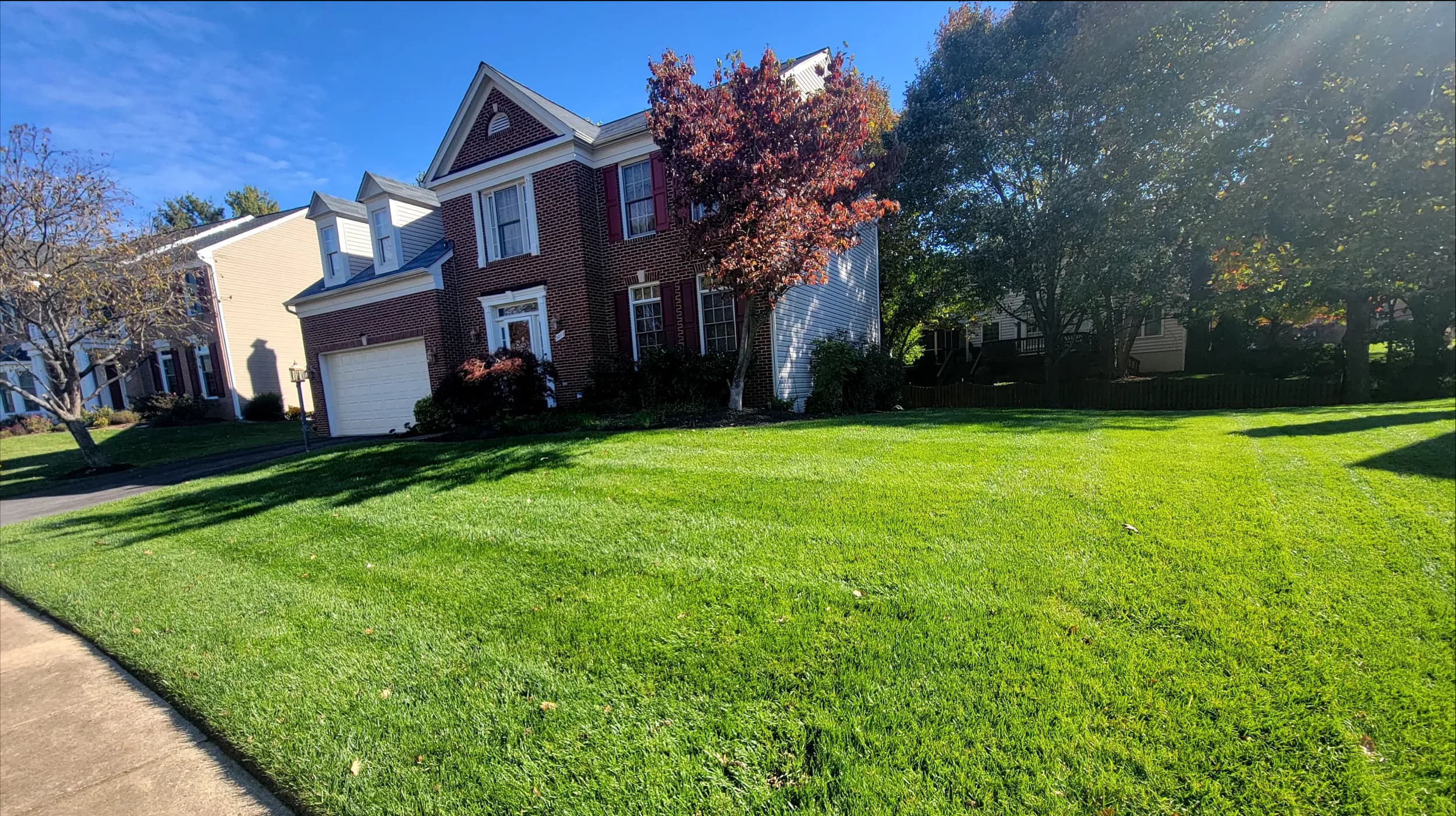
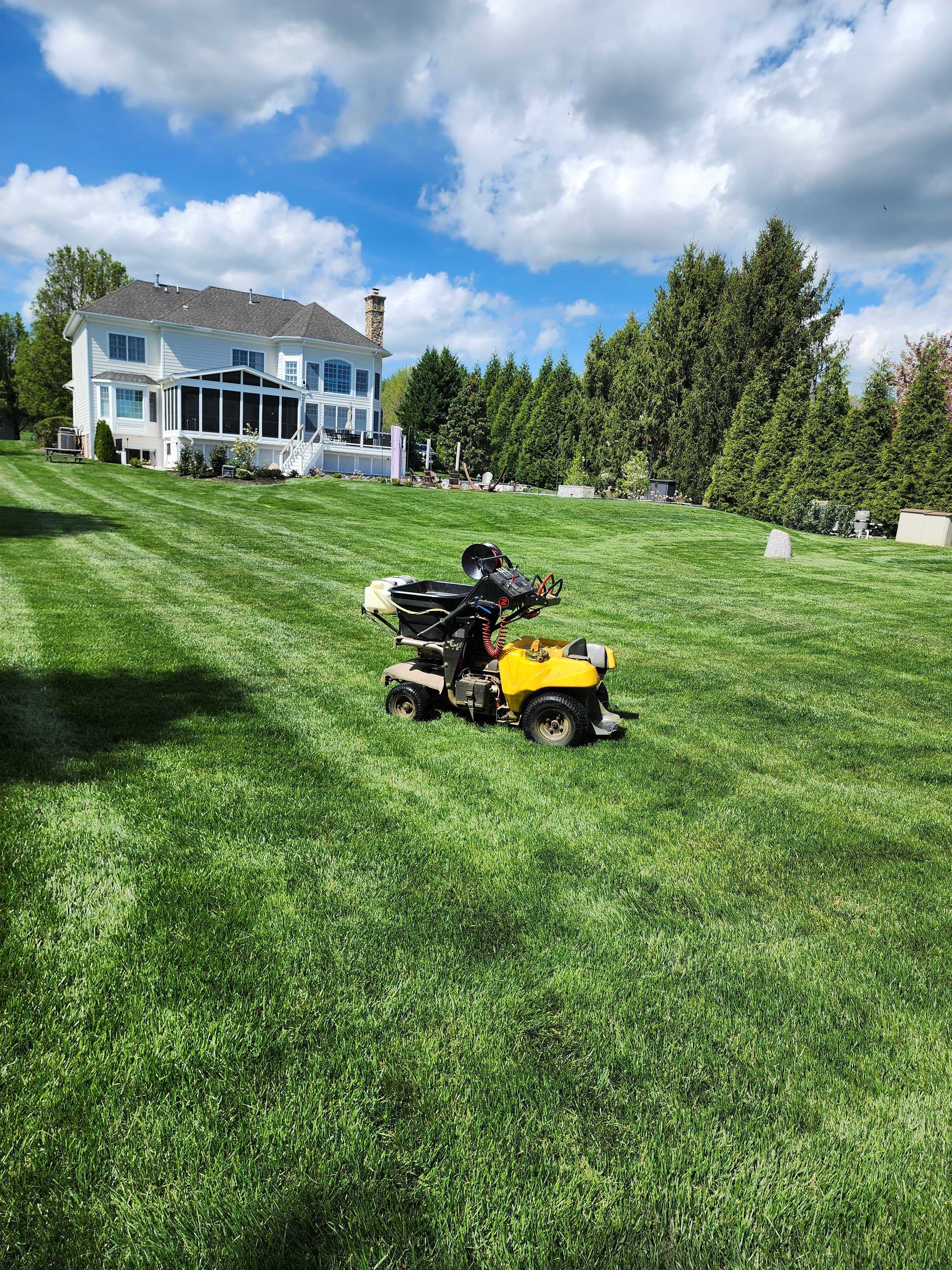
What does a full season lawn care program include?
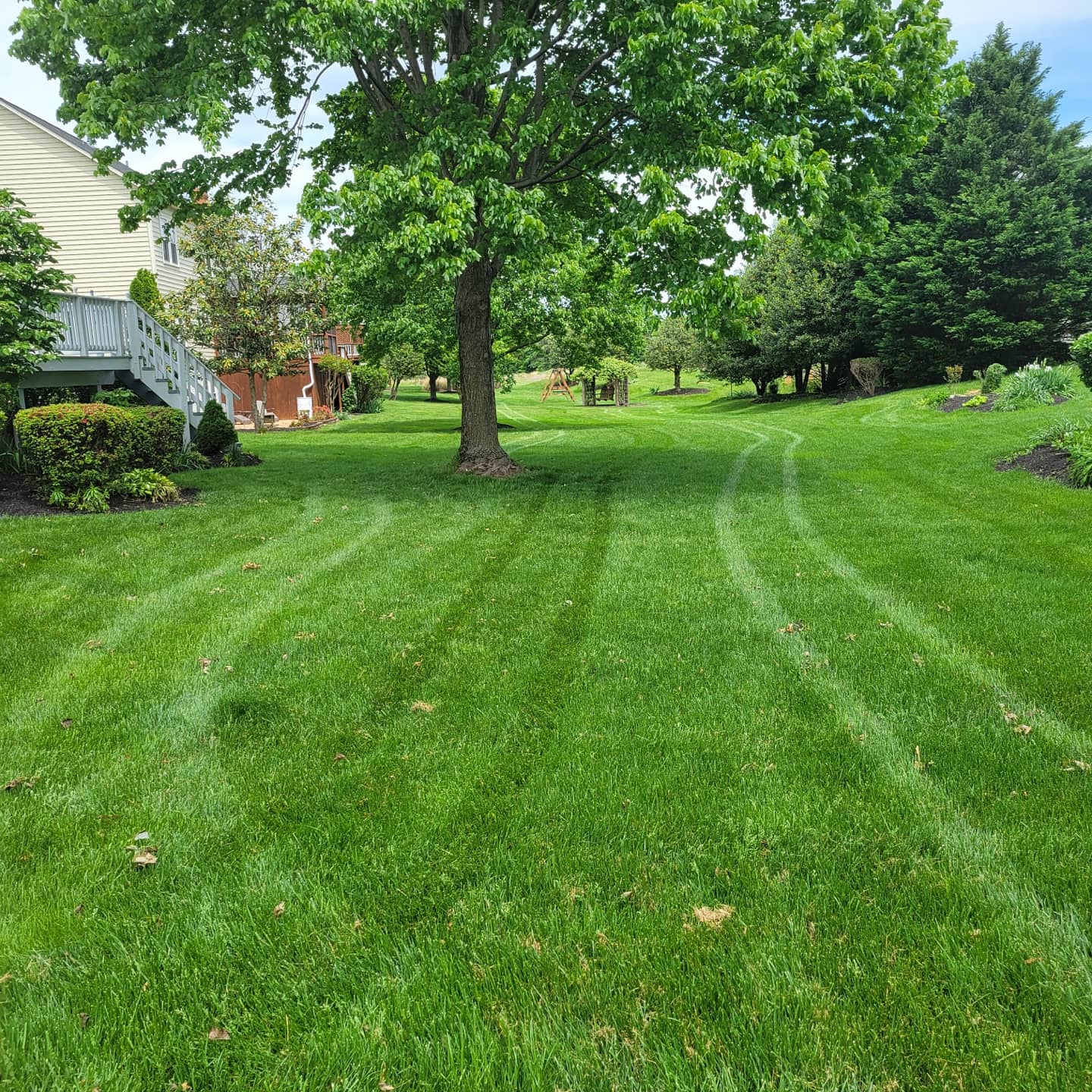
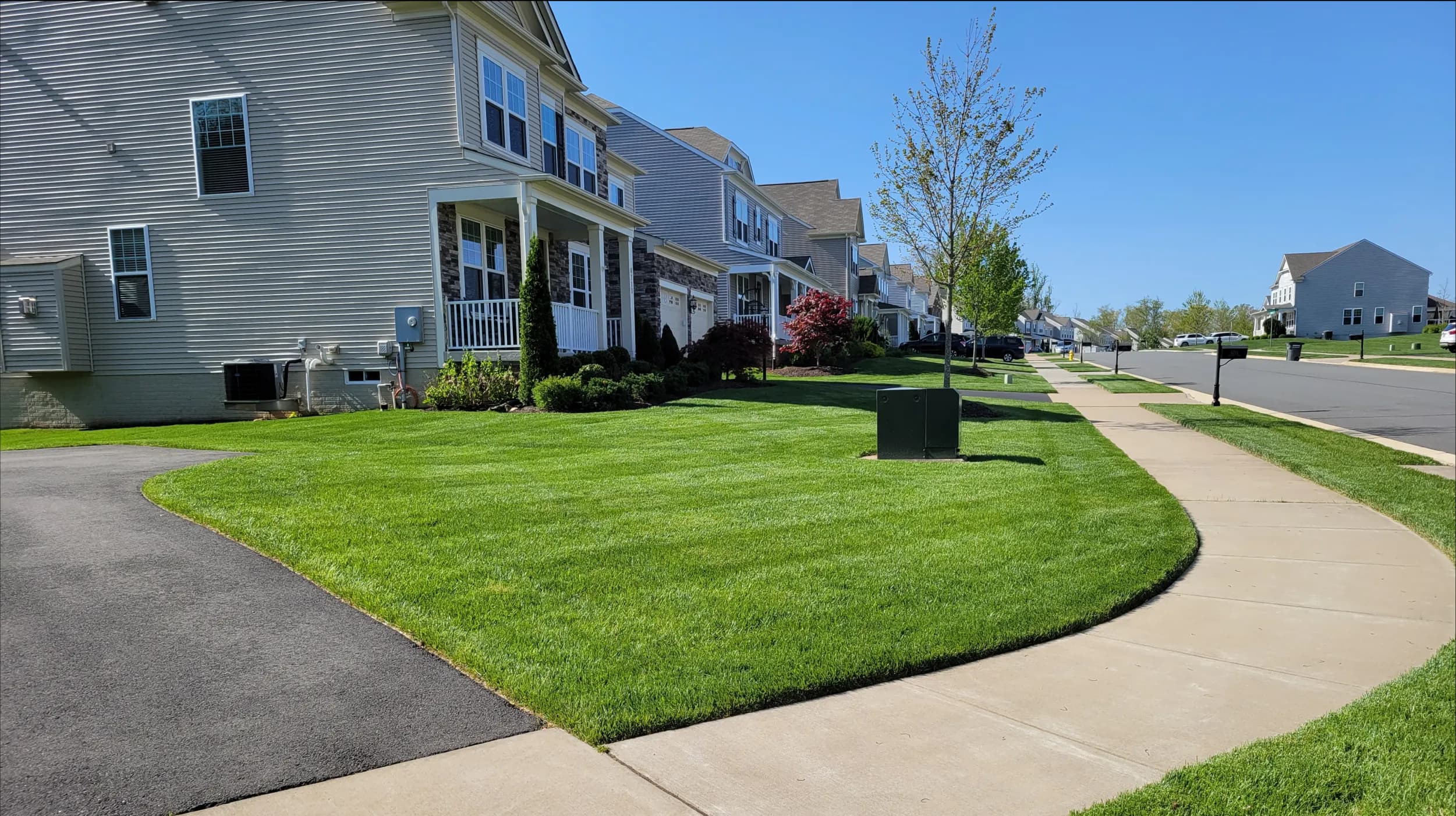
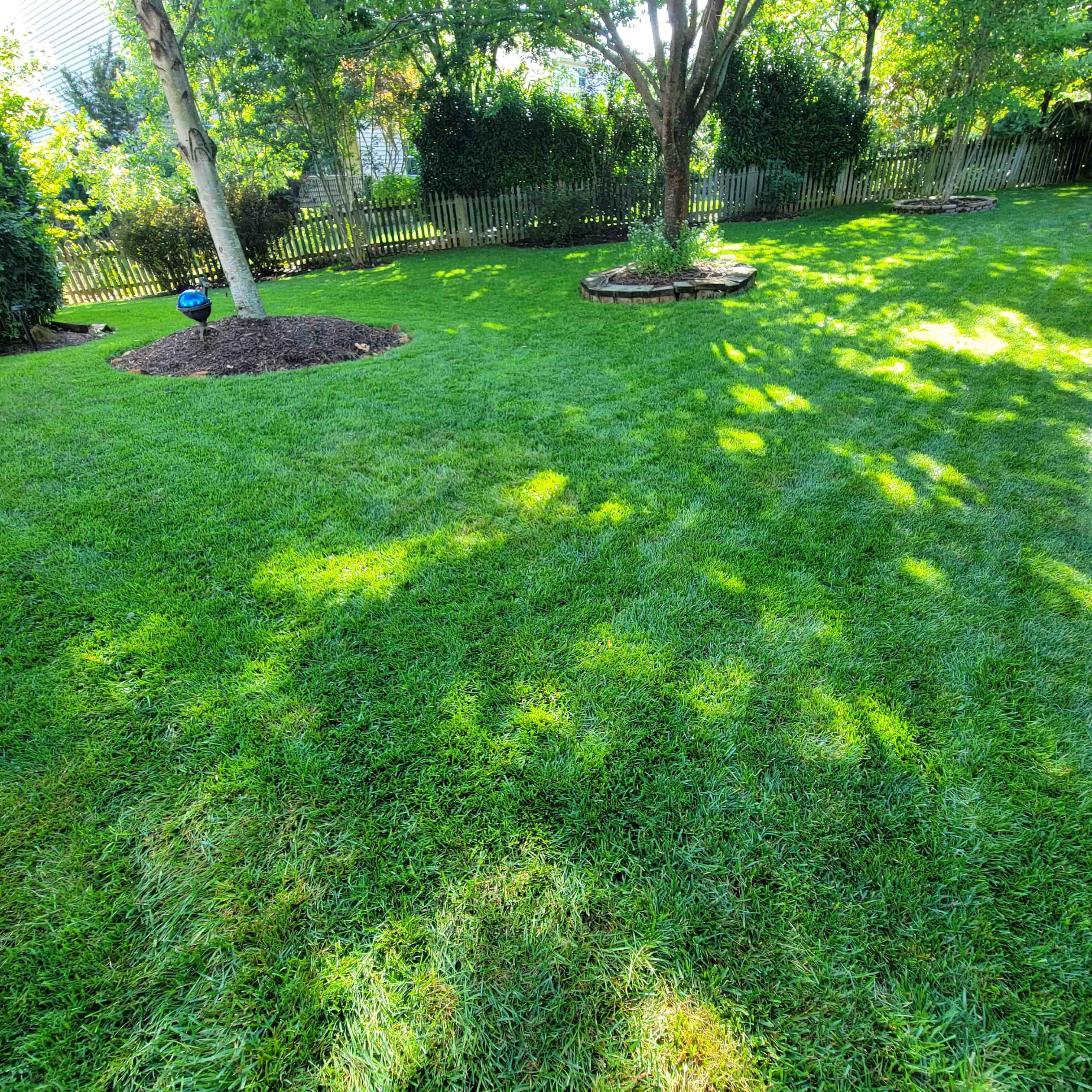
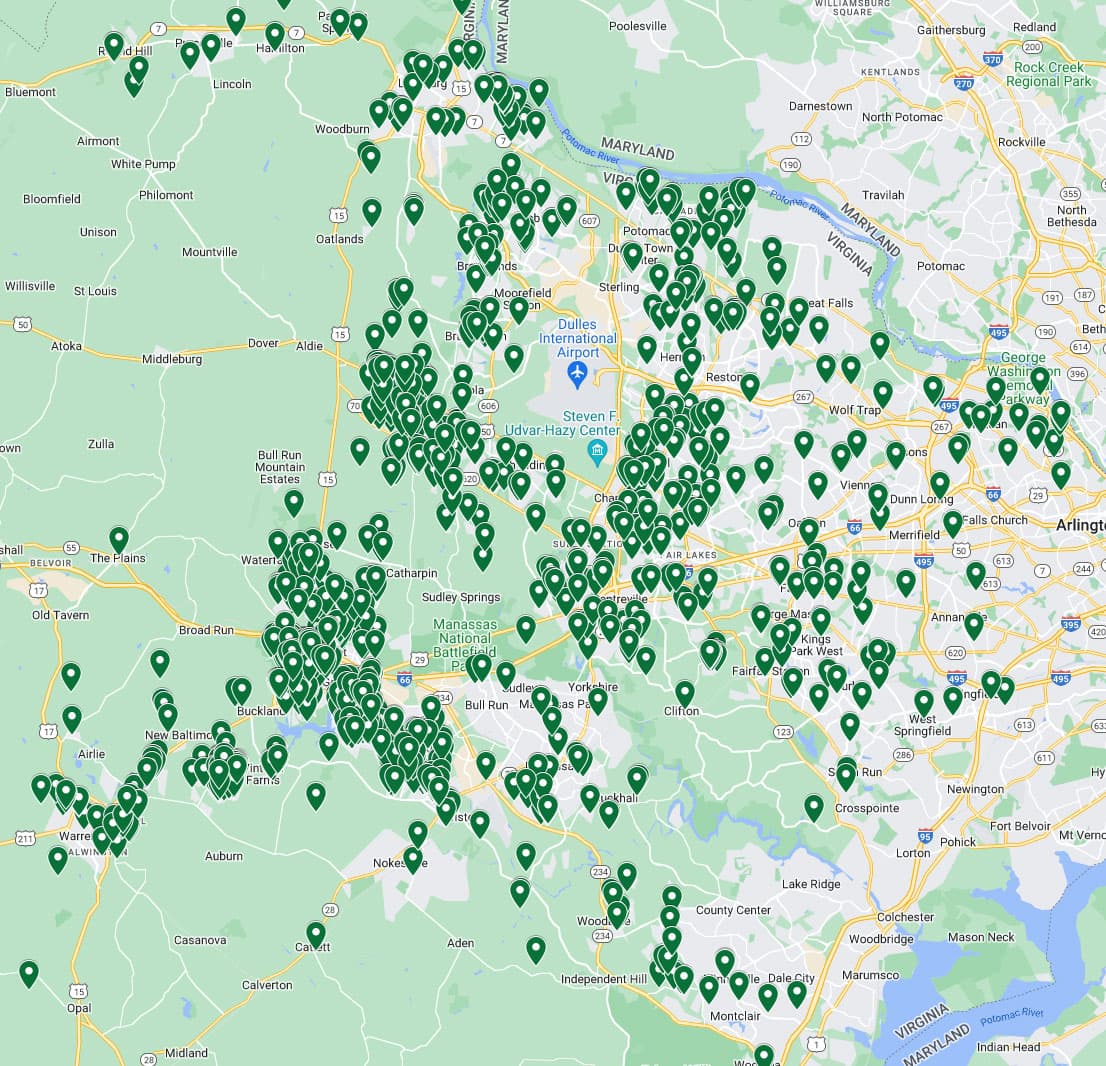
A full season program is a series of scheduled treatments timed to cool-season turf, and we build ours around tall fescue and the heavy clay of Loudoun, Fairfax, Prince William and Fauquier counties.
Visits come roughly every six to eight weeks from early spring through late fall and are priced by lawn size, with townhome lots at about $50 per application and most single-family lawns at $60 to $90. There's no contract, so you pay per application and can stop any time, and our Northern Virginia lawn care cost guide explains the price. The program has three parts.
- Lawn fertilization is our feeding, done with organic based, slow release fertilizers.
- Lawn weed control starts with a spring pre-emergent for crabgrass and follows with broadleaf and summer weed treatments.
- Aeration and overseeding is fall work that opens compacted soil and adds new plants, which is the only way a thin lawn gets thicker.
What does the program do in each season?
Each season gets the treatment cool-season grass needs, and fall gets the most. In the transition zone, turf does its real growing in cool soil and just survives July and August. Our Northern Virginia lawn care calendar is built around fall.
- Early spring brings pre-emergent crabgrass control when soil at two inches hits roughly 55°F (mid-March to early April), plus the first feeding.
- Late spring brings broadleaf control for dandelion, clover and chickweed, and a measured feed.
- Summer means lighter feeding while we manage heat stress, brown patch on tall fescue, nutsedge and Japanese stiltgrass.
- Fall, from late August through October, is for core aeration, overseeding and the heaviest feeding.
- Late fall brings a winterizing feed that builds root reserves for an earlier spring green-up.
Why does clay soil change the schedule?
Clay compacts and starves roots of air and water, so the schedule leans on fall aeration. Without it, roots stay shallow and the turf gives up early in summer. Compost topdressing adds organic matter to the clay, and fertilizer and compost do different jobs.
Spring seed rarely survives its first Northern Virginia July, while fall seed gets two cool seasons to establish, so a thin lawn can't be fixed in April.
We adjust the plan lawn by lawn, as you can see in our pages on lawn care in Gainesville, Ashburn, Bristow and Fairfax.
What is included, and what is not?
The program covers the soil and the grass plant and stops there. Turf work is a licensed trade, and it's what we stick to. If you're weighing DIY, see DIY lawn care versus hiring a pro.
- We include fertilization, pre-emergent and post-emergent weed control, fall core aeration, overseeding with improved grass varieties and a condition check on every visit.
- Compost topdressing for compacted or thin soil and mosquito and tick control are priced separately.
- We don't do mulching, leaf removal, shrub and tree care, irrigation, hardscaping or mowing.
How is Simply Turf different from a national franchise?
Simply Turf is locally owned, has worked out of Gainesville since 2019 and serves only Northern Virginia, so timing follows local soil temperature. Every treatment is made under a Virginia pesticide business license by a VDACS certified applicator.
Owner Patrick Klippen holds a B.S. in Landscape Horticulture from Colorado State University and has more than 20 years in the green industry.
There's no contract or annual commitment. If you're not happy, we keep working until it's resolved, and if you're still not satisfied we refund your most recent fertilization and weed control service. Keep kids and pets off the lawn until it's dry, usually about two hours.
How long does it take to see results?
Expect visible change in color and weed pressure two to four weeks after the first application and a clearly better lawn by season's end. A neglected or badly thinned lawn takes two full years, including two falls of aeration and overseeding.
Density comes from seed rather than fertilizer, so fall overseeding sets the pace on a thin lawn. A few problems no program fixes, and we'll say so. Deep shade never matches full sun, drainage problems keep failing in the same spots and mowing too short in summer thins tall fescue.