Compost Topdressing

Compost topdressing is one of the most effective ways to improve soil quality and strengthen your lawn from the ground up. We apply a premium organic compost layer that enhances soil structure, improves nutrient availability, and supports healthier, more resilient turf.

4.8 rating out of 126 reviews
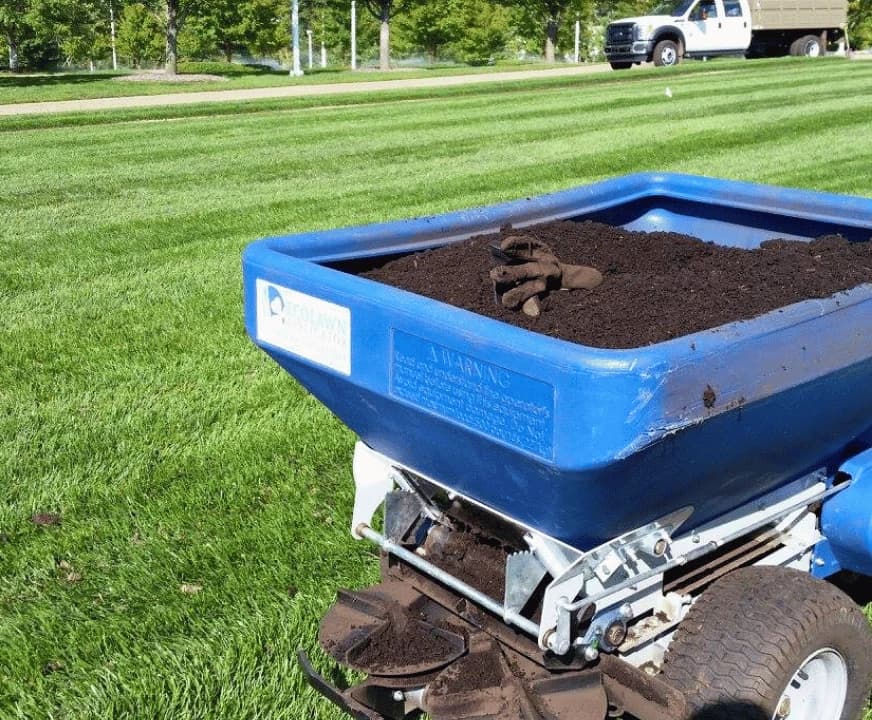
Compost topdressing being applied to a lawn

What Is Compost Topdressing?

Compost topdressing is a thin, even layer of screened organic compost spread over your existing lawn, with nothing torn out or replaced. The compost filters down between the grass blades and gets worked into the top couple of inches of soil over the following months by rain, earthworms, and roots. It is also the only service we offer that permanently changes what is under your feet.

We spread it with a mechanical topdresser rather than by hand, so the layer stays even and never smothers the turf. A standard application is roughly a quarter of an inch deep, which leaves the grass blades fully exposed, and the material is screened, fully matured compost selected for use on turf.

Why Does Compost Matter So Much in Northern Virginia?

Compost matters here because most lawns are not growing in topsoil. Builders stripped it and hauled it away, ran heavy equipment over the lot for months, and then laid sod over compacted subsoil with a token inch of fill. That looks fine for a season or two, then the lawn thins out, and no amount of watering or feeding brings it back.

Subsoil clay is about the worst starting point cool-season turf can have. Its microscopic, plate-shaped particles pack together almost airtight, so roots cannot find oxygen, water sheets off the surface, the ground bakes into a crust by July, and the whole profile is slow to warm up in spring. That is also why core aeration does more good here than almost anywhere else in the country.

We see the same pattern across newer construction in Gainesville, Haymarket, and Bristow, where beautiful houses sit on about four inches of usable soil. Older lawns around Fairfax have the other version of the problem, with decades of mowing traffic and no organic matter ever going back into the ground.

Does Topdressing Actually Fix Clay Soil?

It genuinely improves clay, but it will not turn clay into loam, and anyone promising that from one application is selling you something. Organic matter binds tight clay particles into larger crumbs called aggregates, and the pore space between those crumbs lets air, water, and roots move through soil that used to be sealed shut.

Once water soaks in instead of running off, the lawn holds moisture longer between rains and stays green deeper into summer, and roots follow the water down because there is finally somewhere for them to go. Compost also feeds the microbes, fungi, and earthworms in the soil, and they keep mixing it in long after our truck leaves.

The improvement is cumulative rather than a one-shot repair, so it pays to be realistic. One application makes a modest difference, and three or four consecutive years is what turns a hardpan yard into soil that grows grass.

  • In year one, expect better color for longer between waterings and stronger germination in overseeded areas
  • In year two, a screwdriver pushes into the soil without you leaning on it, and puddles stop lingering
  • From year three on, expect deeper rooting, better heat and drought tolerance, and less bare ground for crabgrass and stiltgrass

Why We Topdress Right After Core Aeration

We topdress right after aeration because that is when compost can get below the surface. Spread on an intact lawn, it only reaches the top, but applied while thousands of aeration holes are still open, it is carried two to three inches down into the root zone, so the same material at the same cost does far more work.

Those filled holes become columns of amended soil running down through the compacted layer, giving water, air, and roots a way in. Repeat the process each fall and the columns multiply until the improvement is continuous rather than spotty, which is why we bundle topdressing with core aeration and fall overseeding instead of selling it alone.

Overseeding benefits too. Seed needs firm contact with moist soil, and seed landing on a hard clay crust mostly dries out or feeds the birds. A light compost layer tucks it in, holds moisture through the critical first two weeks, and gives new tall fescue seedlings a much friendlier medium than raw subsoil.

When Is the Best Time to Topdress a Lawn in Virginia?

Fall, from late August through October, is the ideal window here. The soil is still warm enough for fast root growth and germination, air temperatures have backed off, rainfall is more dependable, and summer weed pressure is fading. The Northern Virginia lawn care calendar shows how topdressing fits into the rest of the year.

Fall also puts the whole sequence in the right order. We aerate, topdress, and overseed, then let the lawn root through the cool months so it enters summer with real depth underneath it. Our guide on when to aerate and overseed in Northern Virginia walks through that order step by step.

Homeowners in Ashburn and Leesburg often ask about spring. Spring topdressing is not harmful and we will do it, but it cannot be paired with seeding, since spring seedlings rarely survive their first Northern Virginia July, so you get a fraction of the benefit. In midsummer we decline the work outright, because a warm organic layer sitting on heat-stressed fescue is an invitation for brown patch.

How Is Compost Different from Fertilizer?

Compost and fertilizer do two different jobs. Fertilizer supplies nutrients to the plant, works within a couple of weeks, and is largely used up by the end of the season. Compost adds organic matter to the soil itself, improving its structure, water-holding capacity, nutrient retention, and biological life, and what you add this year is still there next year.

Well-built soil also makes fertilizer go further, because it holds nutrients in the root zone instead of letting them leach past the roots after heavy rain. That is why we treat topdressing as the foundation under a season-long fertilization program rather than an alternative to one.

Compost Topdressing in Action

Our topdresser applies an even layer of premium organic compost across the lawn
Fall is the ideal time to topdress — especially alongside aeration & overseeding
Compost improves seed germination and early root development

August specials · New clients

The Time to Renovate Your Lawn Is Now

Fall is when Northern Virginia lawns actually recover — and the work gets booked in August. Start now and you head into next spring already ahead.

  • Free bag of seed with your aeration service
  • $25 off fall aeration & overseeding
  • Special discounted rates when you sign up in August
See August Specials

Ends August 31

FAQs

Compost Topdressing FAQs

Everything you need to know at a glance

We notify you via email the Friday before your scheduled service week and again the morning of your service. We ask that you unlock any gates and remove obstructions from the lawn to allow our technicians to efficiently service your property.

Yes, all our products are EPA-approved and safe for kids and pets when used as directed. Our technicians are all licensed by the state of Virginia to safely apply these products.

No, you don't need to be home. We will complete the work as scheduled and leave a door hanger and yard sign. You will also receive a post-service email that will contain any special instructions should there be any.

No, all our services are contract-free. You pay as you go.

Properly finished compost smells like damp earth, not manure, and even that fades within a day or two. If a batch smells sour or like ammonia it has not finished composting, and we will not put it on your lawn. Expect a faint earthy smell the day we apply and nothing after the first rain.

Wait about a week before the next mow, and longer if we overseeded. The compost needs a few days to settle down between the grass blades rather than get swept up by the mower. If we seeded, wait until the new grass is roughly three inches tall, then mow with a sharp blade and leave the clippings.

Fertilization & weed control services

100% Satisfaction Guarantee

We take pride in our work, and if for any reason you're not 100% happy, we won't rest until the issue is resolved. If you're still not completely satisfied after our best efforts, we'll refund your most recent fertilization and weed control service. We stand behind our work and believe that you'll love what we do.

Patrick Klippen, owner of Simply Turf

Patrick Klippen

Owner of Simply Turf

Free quote

Get a Quote Today & We'll Send Our Free Lawn Care Guide

  • 100% satisfaction guarantee — we don't rest until you're happy
  • Rated 4.8 out of 5 from 126+ local reviews
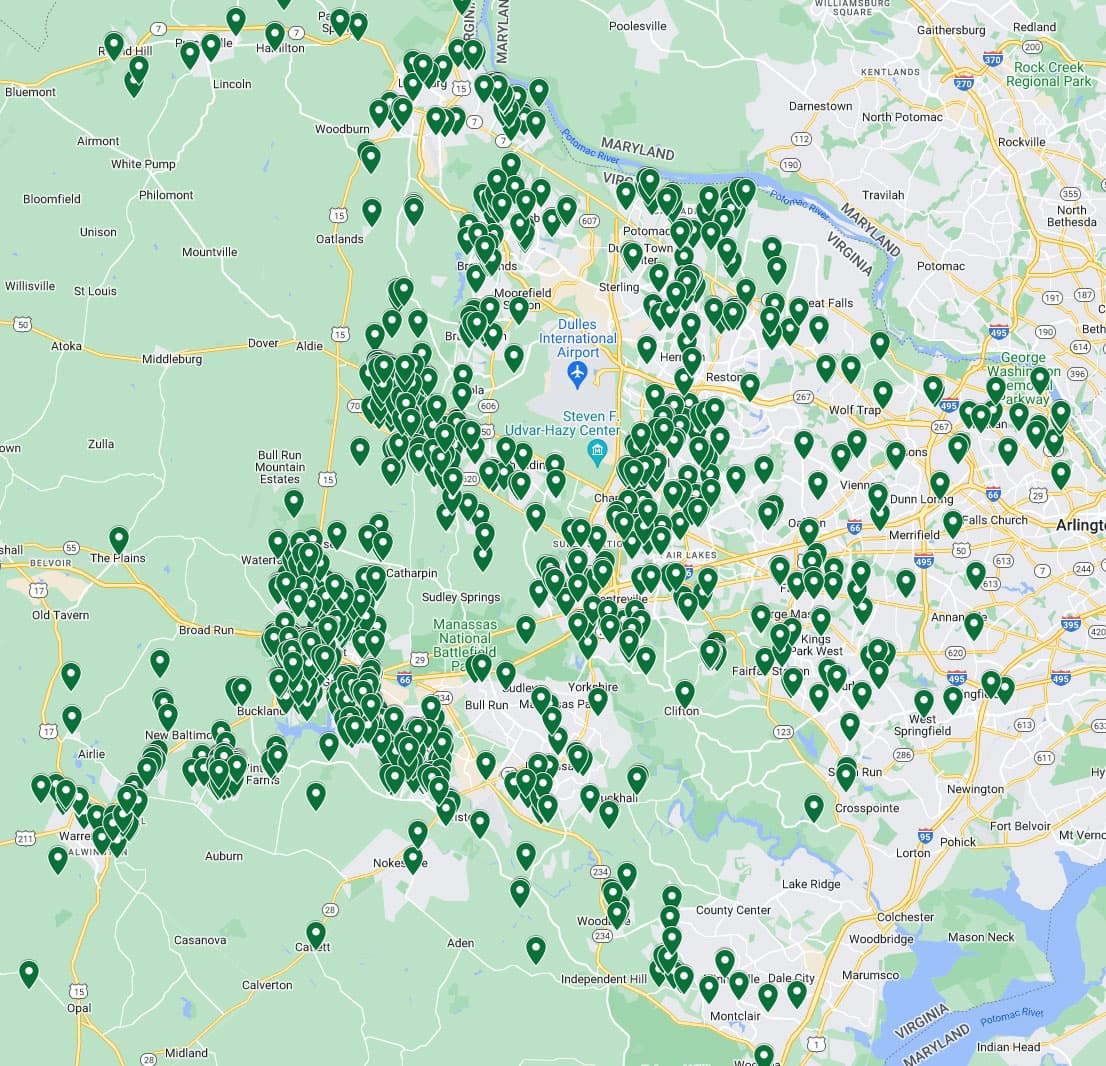
  • Local to Gainesville, VA — serving Loudoun, Fairfax, Prince William & Fauquier Counties

We typically respond in 30 minutes or less

Prefer to talk? Call or text (703) 268-9900

Discounted August rates — applied to this quote

Ends August 31

What services are you interested in? *

No contracts. No spam. We'll send our free lawn care guide with your quote.