Why does a Northern Virginia lawn need a fertilization program?
Summer in the transition zone is hard on even the grasses best suited to it. Tall fescue and Kentucky bluegrass grow mostly in spring and fall, then hold on through July and August. Feeding in the cooler months builds the deep roots that get the lawn through the heat.
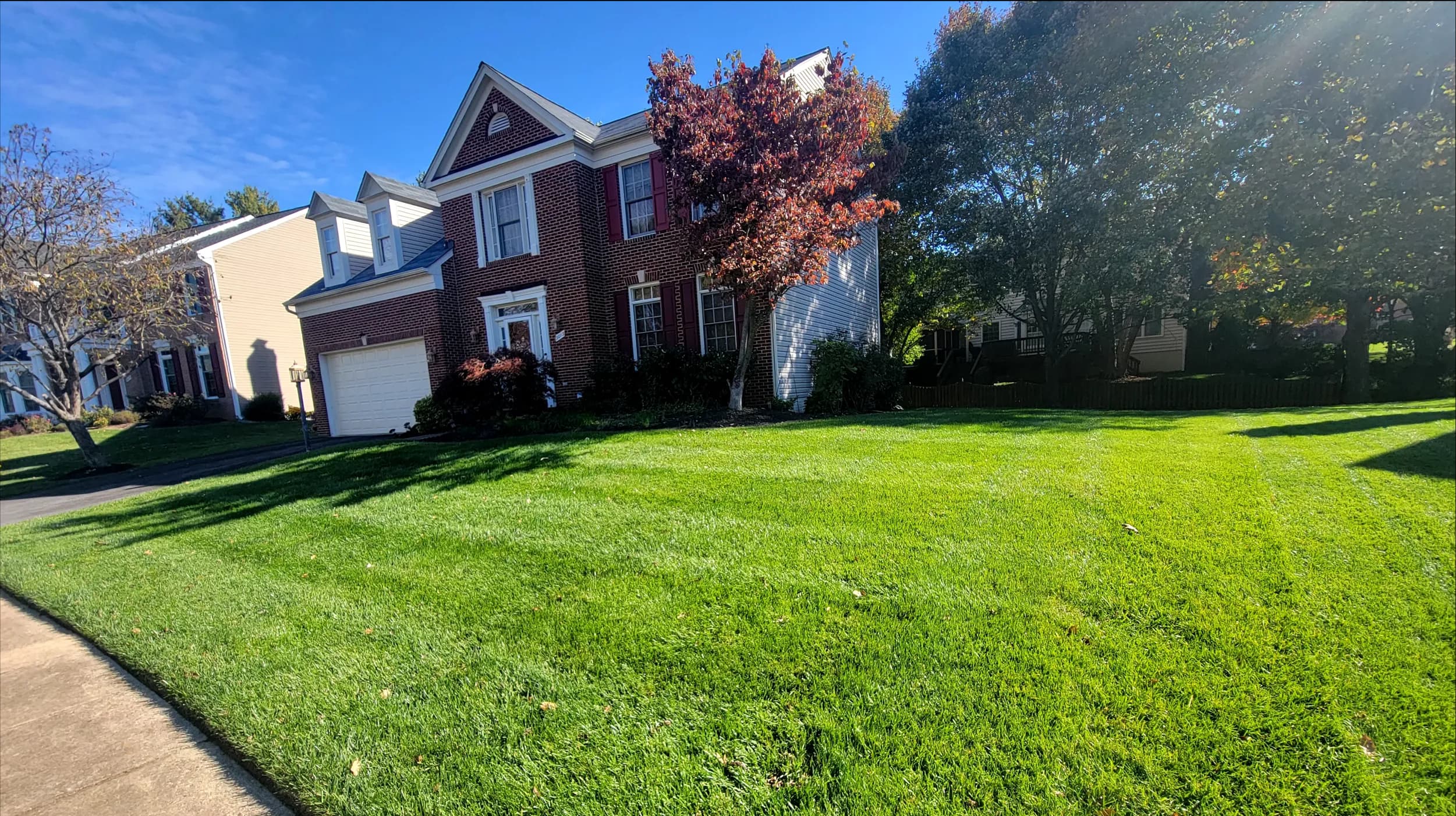
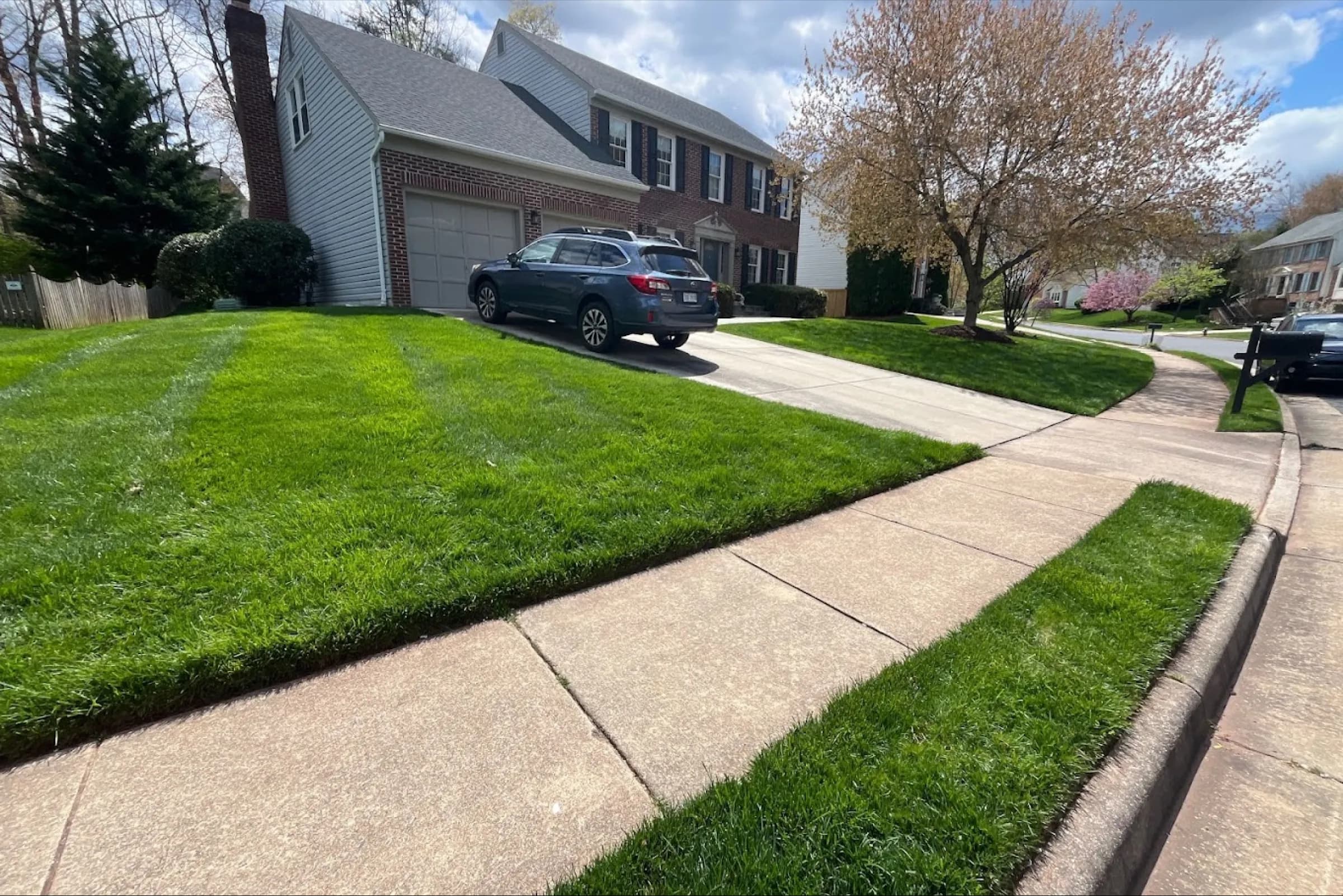
University research backs a timed program. Virginia Cooperative Extension calls fertilization essential for a quality lawn in Virginia, with better density, color and uniformity, and notes that adequate nutrients are particularly important for cool-season grass to survive the summer. Fed on the right schedule, a lawn is healthier, looks better and holds up better to disease and drought.
Timing the nitrogen matters as much as the amount. Measured feedings from late summer into November come when cooling temperatures and shorter days let tall fescue maximize root growth and food storage, which thickens the turf and sets up a better lawn the next spring. Very aggressive spring nitrogen does the opposite and raises the risk of summer disease and drought injury, so we keep spring feedings light and go easy in the heat. The result is thicker grass on deeper, healthier roots, going into a Northern Virginia July ready for the heat and the dry spells.
When should you fertilize a lawn in Northern Virginia?
Fall is the most important season to fertilize here. If you only feed once a year, do it in September, when the soil is warm and the grass is building roots.
Spring feeding should stay light, since heavy nitrogen in April makes soft growth that brown patch attacks in June. The other key feeding comes in late August, paired with core aeration and overseeding, which is our busiest stretch around Gainesville.
- Early spring brings a light feeding for green-up, timed with crabgrass pre-emergent
- Late spring brings slow release nitrogen to carry the lawn into summer
- Summer feedings stay at a maintenance rate and are adjusted for heat and drought stress
- September through early November has the heaviest feedings, which set up next summer's drought tolerance
- For timing month by month, see the Northern Virginia lawn care calendar
Why we go easy on fertilizer in the summer.
Grass under heat stress doesn't need a big meal, because tall fescue slows down once soil climbs into the 80s. Pushing nitrogen then makes soft growth that brown patch feeds on.
Sometimes the honest answer costs us a visit. If your lawn is crispy and dormant in mid-August, it needs water, so mow at three and a half to four inches and water deeply but infrequently. That does more in July than anything we could spread.
What we actually put down.
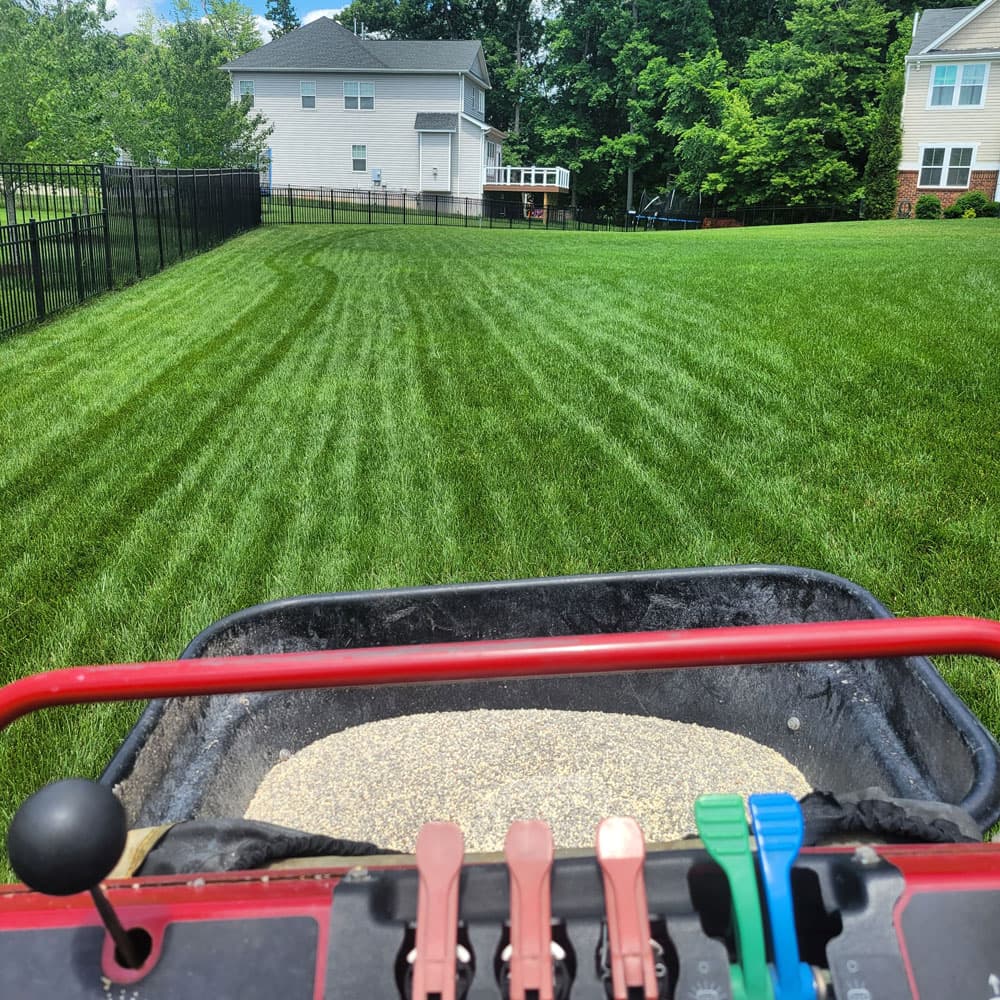
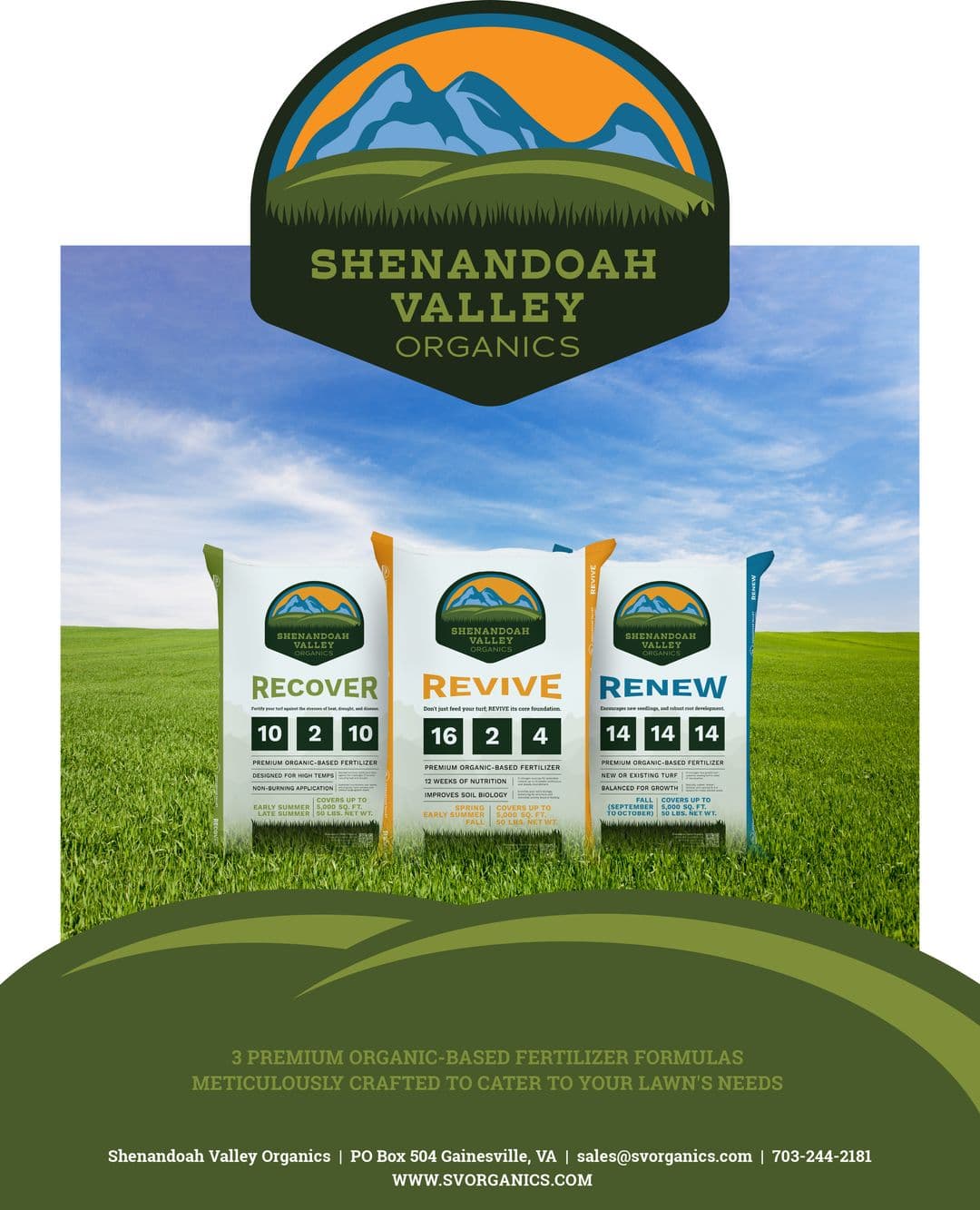
We use a granular fertilizer that is organic based and slow release, at rates designed for cool-season grass on clay. The nitrogen feeds the lawn over ten to twelve weeks instead of all at once, so color stays steady.
The organic part feeds the microbes and earthworms that loosen our clay. Compost topdressing adds organic matter too, and fertilizer and compost do different jobs, so a good lawn needs both.
A thick lawn that has been fed well crowds out many weeds, though not all of them, so we pair feeding with targeted weed control for clover, dandelion, nutsedge and stiltgrass. Our guide to lawn fertilization in Northern Virginia covers products and rates.
Does your lawn need a soil test?
Usually not, and we pull soil tests around the area every year and review the results with our agronomic advisor when developing our custom blends.
True nutrient deficiencies are rare in Northern Virginia clay. A soil test mostly reveals pH, and since soils here run acidic, lime is already built into our program.
If we suspect a real deficiency, we may recommend a test. As a routine diagnostic, soil tests get recommended more often than they should, which our agronomic advisor and university research both back up.
When can kids and pets go back on the lawn?
Keep kids and pets off the lawn until it's dry, usually about two hours while the granules settle and any liquid product dries. Our fertilizers are organic based and slow release. Watering afterward helps but isn't required. See our guide on lawn fertilizer around kids and pets.
Simply Turf holds a Virginia pesticide business license, and our owner is a VDACS certified applicator. Rates, setbacks and cleanup follow state standards, and we blow stray granules off driveways and walkways so they don't wash into a storm drain.
How much does lawn fertilization cost?
Most single-family lawns run $60 to $90 per application, and townhome lots are about $50. Pricing is based on the measured square footage of your turf, and there are no contracts.
Fertilization is the least expensive part of lawn care and the foundation for everything else. We'll tell you honestly whether feeding alone will get you the lawn you want, and you can call (703) 268-9900 for a real number. A typical 8,000 square foot lawn is $65 a visit.