DIY Lawn Care vs. Hiring a Pro in Northern Virginia
Short answer
DIY is the right call if your lot is small, the lawn is already healthy, and you will actually be home on the right week in March and September. Hiring out makes sense when a lawn needs rebuilding rather than maintaining, or when a mistimed application would cost you a whole season. What you buy from a professional is timing and consistency, not secret products.
Should you do your own lawn care or hire a pro?
It comes down to whether you will hit the right weeks, not to how much you spend. Both paths can produce a good tall fescue lawn here, and DIY fails on timing far more often than it fails on products.
| Factor | DIY | Professional |
|---|---|---|
| Cost | Products plus equipment — typically $300 to $500 a season in products alone for an average lawn | About $50 per visit for townhome lots and $55 to $75 for most single-family lawns — several hundred dollars for the full season, pay as you go |
| Time per year | Several weekend mornings, plus a full day for aeration | Nothing beyond mowing and watering |
| Equipment | Spreader, sprayer, aerator rental | Included, and calibrated |
| Products | Retail blends, mostly quick-release | Commercial slow-release, blended for clay and fescue |
| Timing precision | Depends on your weekends and the weather | Scheduled off soil temperature |
| Risk of a costly mistake | Burned turf or a wasted seeding is on you | Carried by the company, under its guarantee |
When DIY is the right call
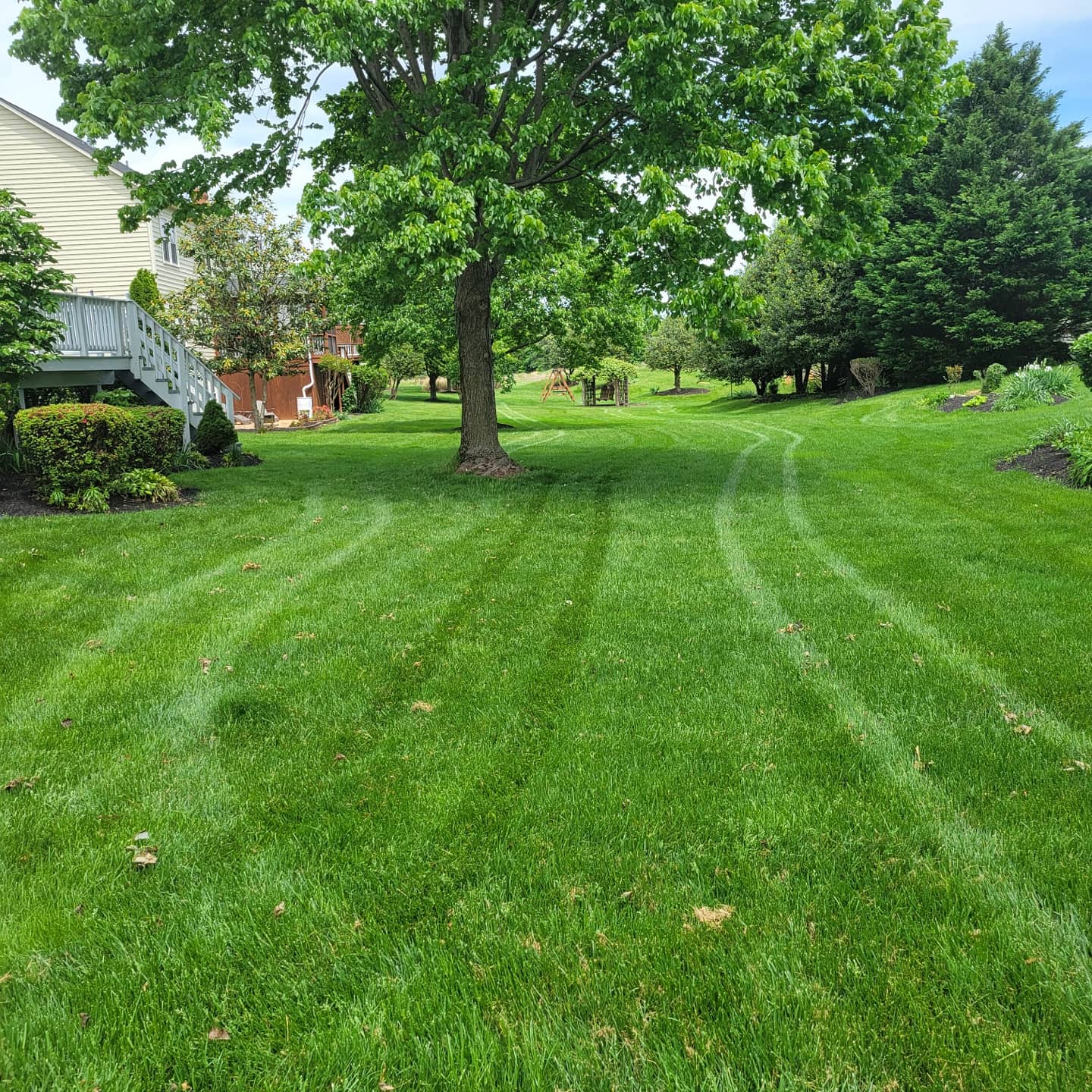
When the lot is small, the lawn is already thick, and you genuinely like the work. Maintaining a healthy lawn is far easier than rebuilding a thin one — mow high, water deeply, feed a few times a year, and it holds.
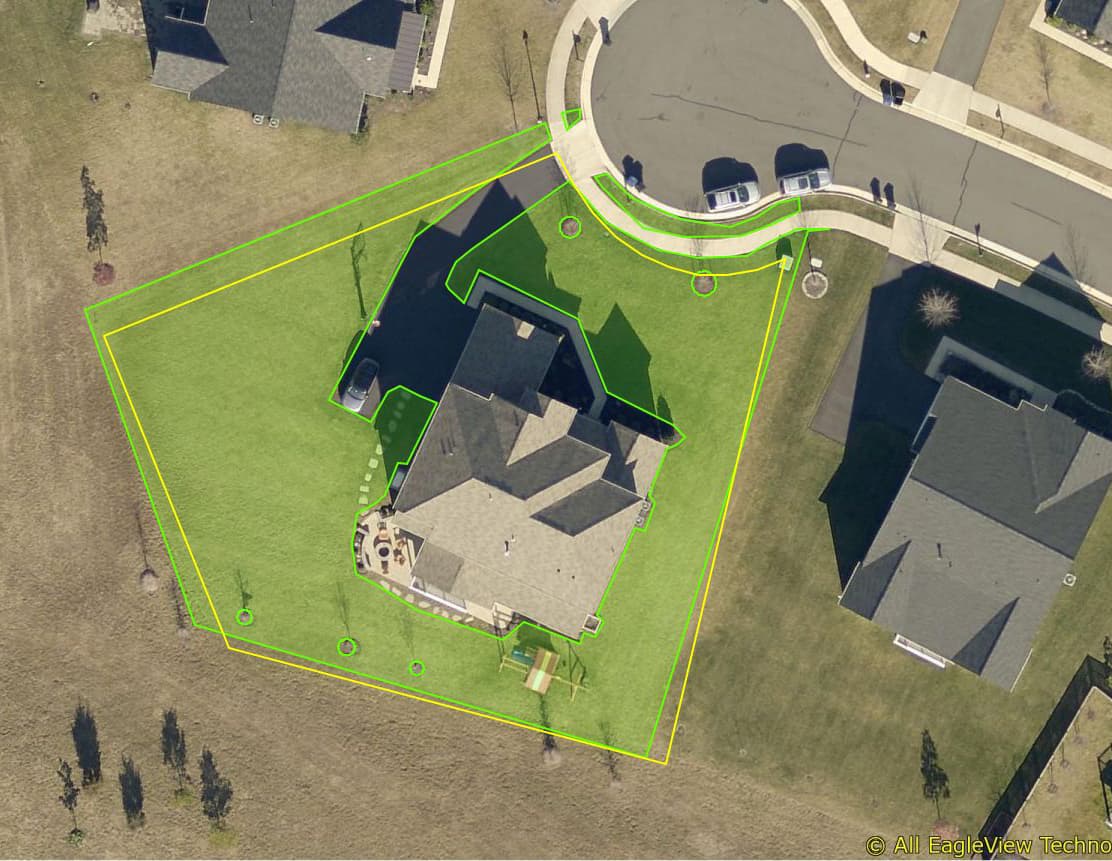
Small townhome and cluster lots, the kind that fill much of Centreville, make the strongest case. One bag covers the yard, a hand spreader is enough, and the whole application takes twenty minutes.
- Roughly 5,000 sq ft or less, where a single bag covers the lawn
- Turf that only needs maintaining, not recovering
- You will be home and willing in mid-March and early September
- You enjoy it, because consistency year after year is the whole game
What DIY actually costs
More than the bag of fertilizer, which is where most estimates go wrong. Add equipment up front, a soil test, and four or five products across the season before comparing anything to a quote.
- A broadcast spreader and a pump or backpack sprayer — roughly $100 to $250 for decent versions of both
- A soil test through Virginia Cooperative Extension — $10 for the routine test
- Season-long products — typically $300 to $500 for an 8,000 sq ft lawn
- A core aerator rental for a fall weekend — around $100 a day, plus a truck or trailer to move it
Why an uncalibrated spreader ruins good intentions
An uncalibrated spreader is the most common reason DIY fertilization disappoints. Every spreader throws a different pattern at the same setting, so the number on the bag is a starting point, not an answer.
Set it too low and you get faint striping and no real response. Set it too high and you burn yellow rows that stay visible for weeks. Calibrating means weighing product over a measured area and adjusting, which costs you one Saturday morning.
Where DIY usually goes wrong
Timing, not effort. Most neglected-looking DIY lawns we take over were treated — they were treated on the wrong week.
Crabgrass pre-emergent has to go down before soil at two inches holds near 55°F, typically mid-March here, and a warm February moves it earlier. Miss that week and you pay for the application without getting the control. Our Northern Virginia lawn care calendar lays out the rest of the year.
- Retail products are formulated for a national average lawn and are mostly quick-release
- Restricted-use products are not sold to homeowners; they require a certified applicator
- A rented core aerator is heavy, awkward to haul, and a full day on a typical lot
- One mistake is expensive: burning the lawn, or applying pre-emergent before a fall seeding, wastes a season
What you are actually paying a professional for
Timing, calibrated equipment, and product access — in that order. A licensed applicator shows up in the right week because it is the job, not because the weekend happened to be free.
The products differ too. Commercial slow-release nitrogen feeds over weeks instead of dumping color in ten days, which is why our lawn fertilization program is organic-based and slow-release rather than a quick green-up. Our lawn care cost guide covers what programs run here.
The honest bottom line
The strongest case for hiring out is timing and consistency, not secret products. A homeowner who calibrates a spreader, tests the soil, and hits mid-March and early September will grow a lawn most people would call professional.
The catch is doing all of it five years running. If you know you will not, the money is better spent on someone whose calendar depends on it — starting with fall aeration and overseeding, the job that changes a lawn most.
Want this handled for you?
Simply Turf is a licensed, locally owned turf-health company in Gainesville, VA. Free quote, no contracts, and honest advice about what your lawn actually needs.
Common questions
On product alone, usually yes. Once a spreader, a sprayer, a soil test, and an aerator rental are counted, the first year lands closer than most people expect. And one burned application or a wasted fall seeding erases the savings outright.
Core aeration and overseeding. It is the highest-value day of the lawn year on Northern Virginia clay, the rental equipment is genuinely unpleasant to run, and doing it a month late wastes the seed. Everything else on the calendar is easier to do yourself.
You can, but it is an inefficient way to buy both products. Weed-and-feed spreads herbicide across the whole lawn to treat weeds in a few spots, and it ties your feeding to the herbicide timing rather than to what the grass needs. Spot-spraying and feeding separately uses less product.
No, not for general-use products on property you own. Restricted-use products require certification, and treating someone else's lawn for hire in Virginia requires a certified applicator and a business license. That is part of why retail and professional product lists differ.